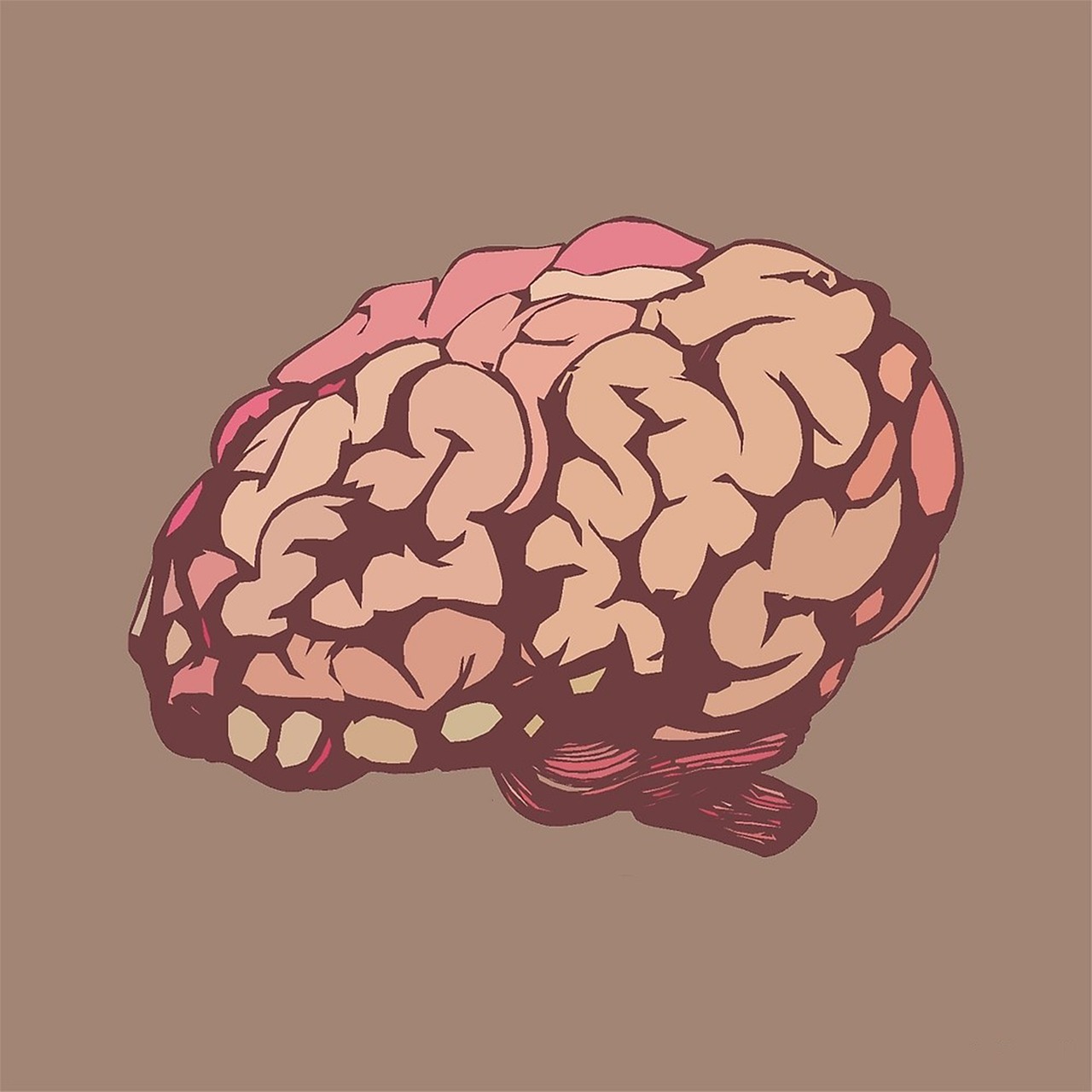
The human mind operates like an intricate web of interconnected pathways, where each thought, memory, and concept finds its place within a complex network. Understanding how we organize and navigate this mental landscape has become crucial in cognitive science.

Cognitive map structures represent one of the most fascinating frameworks for understanding how humans process, store, and retrieve information. These mental blueprints shape our ability to learn, make decisions, and interact with the world around us. By exploring these invisible architectures of thought, we can unlock profound insights into human consciousness and intelligence.
🧠 The Foundation of Mental Architecture
Cognitive maps are internal representations that allow individuals to acquire, code, store, recall, and decode information about the relative locations and attributes of phenomena in their everyday spatial environment. First introduced by psychologist Edward Tolman in 1948, this concept revolutionized our understanding of learning and memory beyond simple stimulus-response mechanisms.
These mental structures function as sophisticated navigation systems within our consciousness. They enable us to move through physical spaces without conscious effort, but their influence extends far beyond geographical navigation. Cognitive maps shape how we understand relationships between concepts, organize knowledge domains, and construct our understanding of complex systems.
The brain constructs these maps through a dynamic process of encoding environmental information into neural networks. Each experience adds layers of detail, creating increasingly refined representations. This continuous updating process demonstrates the remarkable plasticity of human cognition and our capacity for lifelong learning.
Neural Pathways and Mental Cartography
Modern neuroscience has revealed that cognitive maps are not merely metaphorical constructs but have actual neural correlates in the brain. The hippocampus, particularly, plays a crucial role in forming and maintaining these spatial representations. Place cells within this region fire when an individual occupies specific locations, while grid cells create a coordinate system for navigation.
Research has shown that these same neural mechanisms apply to abstract conceptual spaces. When we organize ideas hierarchically or understand relationships between different domains of knowledge, similar brain regions activate. This suggests that the brain uses spatial mapping as a fundamental organizing principle for all types of information.
The discovery of cognitive map structures in the brain earned John O’Keefe, May-Britt Moser, and Edvard Moser the Nobel Prize in Physiology or Medicine in 2014, highlighting the profound importance of this research in understanding human cognition.
📍 Beyond Physical Space: Conceptual Mapping
While cognitive maps originated from studies of spatial navigation, their application extends into abstract domains of thought. We create mental maps of social hierarchies, conceptual relationships, temporal sequences, and even narrative structures. This versatility makes cognitive mapping a universal cognitive tool.
In education, understanding how students construct cognitive maps of subject matter reveals why some learning strategies prove more effective than others. When information connects to existing mental structures, integration becomes seamless. Conversely, isolated facts without clear relationships to existing knowledge struggle to find purchase in long-term memory.
Experts in any field develop rich, densely interconnected cognitive maps of their domain. These elaborate structures allow rapid pattern recognition, creative problem-solving, and intuitive decision-making. The difference between novice and expert performance often lies not in raw processing power but in the sophistication of underlying cognitive map structures.
The Architecture of Expertise
Developing expertise requires building increasingly refined cognitive maps through deliberate practice and experience. Master chess players don’t merely remember more positions; they recognize meaningful patterns and relationships that escape beginners. Their cognitive maps organize board configurations into hierarchical structures that enable rapid evaluation and strategic planning.
This principle applies across disciplines. Medical diagnosticians develop maps linking symptoms to underlying conditions, musicians build representations connecting sound patterns to emotional effects, and programmers construct mental models of system architectures. Each domain requires its own specialized cognitive geography.
🗺️ Cognitive Maps in Decision Making and Problem Solving
Every decision we make involves navigating through a cognitive map of possibilities, constraints, and outcomes. These mental representations help us evaluate options, predict consequences, and chart courses of action. The quality of our decisions depends significantly on the accuracy and completeness of our underlying cognitive maps.
When facing complex problems, we mentally simulate different scenarios by traversing our cognitive maps. This internal exploration allows us to test hypotheses, identify potential obstacles, and discover novel solutions without costly real-world experimentation. Mental simulation represents one of humanity’s most powerful cognitive capabilities.
However, cognitive maps can also introduce systematic biases. Incomplete or distorted mental representations lead to predictable errors in judgment. Confirmation bias, for instance, occurs when we navigate preferentially toward information confirming existing map structures while avoiding contradictory evidence. Understanding these limitations helps us develop strategies to improve decision quality.
Navigating Uncertainty and Ambiguity
Real-world situations rarely provide complete information. Our cognitive maps must accommodate uncertainty and adapt to changing circumstances. The most effective mental models remain flexible, incorporating probabilistic thinking and multiple alternative scenarios rather than rigid, deterministic structures.
People with adaptive cognitive maps demonstrate greater resilience when facing unexpected challenges. They can rapidly reconfigure their mental representations to incorporate new information, while those with rigid structures struggle when reality contradicts their expectations. This cognitive flexibility represents a critical component of emotional intelligence and adaptive expertise.
The Social Dimension of Cognitive Mapping
Humans are inherently social creatures, and our cognitive maps extend into the social realm with remarkable sophistication. We maintain mental representations of social networks, including individuals’ characteristics, relationships, social hierarchies, and group dynamics. These social cognitive maps guide our interactions and shape our understanding of complex social environments.
Theory of mind—our ability to attribute mental states to others—depends on cognitive maps representing others’ beliefs, desires, and intentions. These representations allow us to predict behavior, empathize with others’ experiences, and coordinate complex social activities. Deficits in social cognitive mapping characterize conditions like autism spectrum disorders.
Cultural knowledge also exists as shared cognitive maps within communities. These collective representations include social norms, values, traditions, and shared histories that bind groups together. When individuals from different cultures interact, they must navigate between different cognitive map structures, which can lead to both misunderstandings and creative insights.
💡 Enhancing Cognitive Map Development
Understanding how cognitive maps form and function opens possibilities for intentionally improving our mental representations. Various strategies can enhance the quality, accuracy, and utility of our cognitive structures.
- Active learning: Engaging deeply with material rather than passively consuming information creates stronger, more integrated cognitive maps
- Elaborative rehearsal: Connecting new information to existing knowledge structures strengthens neural pathways and improves retention
- Multiple perspectives: Viewing concepts from different angles creates richer, more nuanced mental representations
- Regular review: Periodically revisiting information reinforces neural connections and prevents cognitive map degradation
- Practical application: Using knowledge in real contexts solidifies abstract representations into functional cognitive tools
Visualization techniques prove particularly effective for building cognitive maps. Mind mapping, concept mapping, and other diagrammatic approaches externalize mental structures, making them easier to evaluate, refine, and communicate. These tools bridge internal cognitive architecture with external representations.
Technology and Cognitive Augmentation
Digital tools increasingly support cognitive map development and navigation. Educational software can adapt to individual learning patterns, helping students build more effective knowledge structures. Visualization platforms allow complex data relationships to be represented in ways that align with natural cognitive mapping processes.
Artificial intelligence systems now assist in organizing information according to cognitive principles, though they cannot replicate the full richness of human mental representations. The most effective approaches combine computational power with human cognitive strengths, creating hybrid systems that augment rather than replace human thinking.
Clinical and Therapeutic Applications
Understanding cognitive map structures has important implications for treating various neurological and psychological conditions. Cognitive rehabilitation after brain injury often focuses on reconstructing damaged mental representations. Therapists help patients rebuild cognitive maps of daily routines, spatial environments, and conceptual knowledge.
In mental health treatment, cognitive-behavioral therapy works partly by helping clients restructure maladaptive cognitive maps. Depression and anxiety often involve distorted mental representations of oneself, others, and the world. Therapeutic interventions aim to create more accurate, balanced cognitive structures that support psychological wellbeing.
Neurodegenerative diseases like Alzheimer’s progressively damage cognitive map structures, particularly those related to spatial navigation and episodic memory. Early detection of subtle changes in cognitive mapping abilities may enable earlier intervention and better disease management strategies.
🔍 Future Directions in Cognitive Map Research
The field continues to evolve rapidly as neuroscience, psychology, and computer science converge. Advanced brain imaging techniques reveal increasingly detailed pictures of how neural networks encode spatial and conceptual information. These insights may eventually enable direct visualization of individual cognitive maps.
Artificial intelligence research draws inspiration from biological cognitive mapping systems. Deep learning architectures increasingly incorporate principles of spatial and relational reasoning observed in human cognition. Understanding how humans build and navigate cognitive maps may lead to more sophisticated AI systems.
Virtual and augmented reality technologies offer unprecedented opportunities to study cognitive map formation in controlled yet realistic environments. Researchers can now manipulate spatial and conceptual relationships while monitoring neural activity, providing insights impossible with traditional experimental methods.
Cross-Disciplinary Integration
Future progress will require integration across traditionally separate disciplines. Cognitive scientists, neuroscientists, educators, designers, and technologists must collaborate to fully understand and apply cognitive mapping principles. This interdisciplinary approach promises breakthroughs in education, interface design, therapeutic interventions, and artificial intelligence.
Practical Implications for Everyday Life
Understanding cognitive map structures offers practical benefits beyond academic interest. By recognizing how our minds organize information, we can work with rather than against our natural cognitive architecture. This awareness enables more effective learning strategies, better decision-making processes, and improved problem-solving abilities.
In professional contexts, leaders can foster environments that support healthy cognitive map development among team members. Clear organizational structures, consistent communication patterns, and opportunities for experiential learning all contribute to building shared mental models that enable effective collaboration.
Personal growth involves continuously refining and expanding our cognitive maps. Seeking diverse experiences, challenging our assumptions, and remaining open to new perspectives prevents our mental models from becoming rigid and outdated. Cognitive flexibility represents a crucial skill in rapidly changing environments.

The Transformative Power of Understanding Thought
Cognitive map structures represent far more than academic curiosities—they constitute the fundamental architecture of human thought itself. Every perception, memory, decision, and creative insight emerges from these intricate mental representations. By understanding how cognitive maps form, function, and can be enhanced, we unlock tremendous potential for human development.
The journey to understand human cognition continues, with each discovery revealing new dimensions of mental life. Cognitive mapping provides a powerful framework for integrating diverse findings into coherent models of mind. As research progresses, we move closer to comprehending the remarkable system that enables consciousness, intelligence, and the full richness of human experience.
Whether navigating physical spaces, conceptual domains, or social landscapes, we rely constantly on cognitive maps. These mental structures shape who we are and what we can become. By appreciating their power and learning to cultivate them intentionally, we enhance not just individual capabilities but collective human potential. The exploration of cognitive map structures represents an exploration of what makes us fundamentally human—our ability to create internal worlds that reflect, predict, and transform external reality.