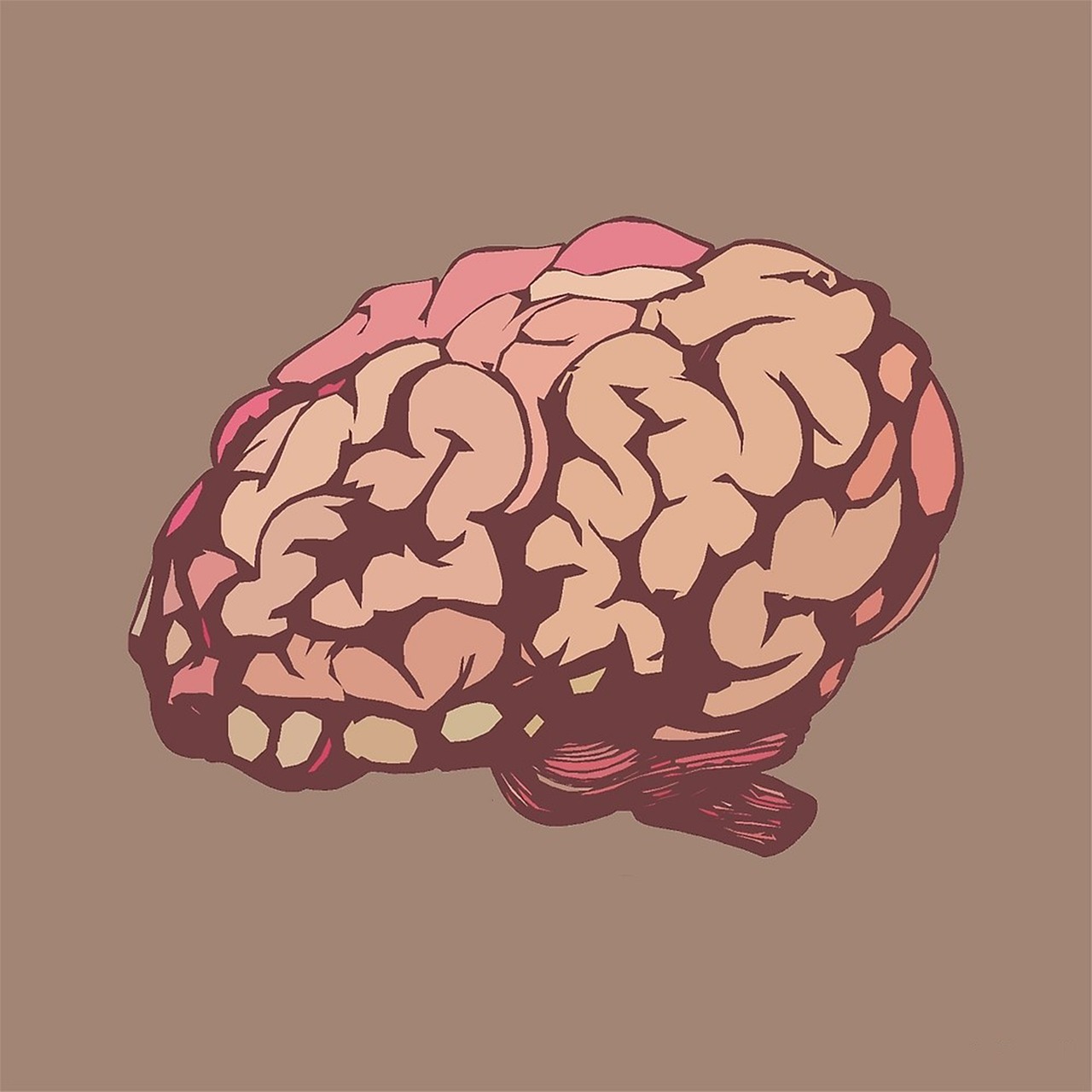
The human brain remains one of science’s greatest frontiers, holding secrets to consciousness, memory, and the essence of what makes us human. Recent advances in neuroimaging and computational neuroscience have revolutionized our ability to peer into this complex organ.

Understanding the intricate relationship between brain structure and cognitive function has long captivated researchers, clinicians, and technology innovators alike. Today’s cutting-edge brain mapping techniques offer unprecedented insights into neural networks, connectivity patterns, and the biological foundations of thought itself. These technological breakthroughs are not merely academic exercises—they’re transforming how we diagnose neurological conditions, develop treatments, and even enhance human performance.
🧠 The Evolution of Brain Mapping Technologies
Brain mapping has come a remarkably long way from the rudimentary phrenology charts of the 19th century. Early neurologists relied primarily on observing behavioral changes in patients with brain injuries to infer functional localization. The introduction of electroencephalography (EEG) in the 1920s represented the first major technological leap, allowing researchers to measure electrical activity across the scalp.
The latter half of the 20th century witnessed an explosion of imaging modalities. Computed tomography (CT) scans provided the first detailed structural images of living brains, while positron emission tomography (PET) offered glimpses into metabolic activity. However, these early techniques had significant limitations in temporal resolution, spatial precision, or both.
Modern brain mapping techniques have transcended these constraints, offering researchers tools that can capture neural activity with millisecond precision while pinpointing locations within millimeters. This convergence of spatial and temporal resolution has opened entirely new research avenues, enabling scientists to observe the brain as it processes information in real-time.
Functional Magnetic Resonance Imaging: The Workhorse of Modern Neuroscience
Functional MRI (fMRI) has become perhaps the most widely recognized brain mapping technique in contemporary neuroscience. By detecting changes in blood oxygenation levels, fMRI indirectly measures neural activity across the entire brain. When neurons fire, they consume oxygen, triggering increased blood flow to active regions—a phenomenon called the hemodynamic response.
The beauty of fMRI lies in its non-invasive nature and its whole-brain coverage. Researchers can observe participants performing cognitive tasks while simultaneously mapping which brain regions activate during specific mental operations. This has led to groundbreaking discoveries about the neural correlates of memory formation, emotional processing, decision-making, and language comprehension.
Recent Innovations in fMRI Technology
Ultra-high-field fMRI scanners, operating at 7 Tesla or higher, now provide exceptional spatial resolution, distinguishing activity in cortical layers and subcortical nuclei previously invisible to imaging. Real-time fMRI neurofeedback has emerged as both a research tool and therapeutic intervention, allowing individuals to observe and modulate their own brain activity patterns.
Multi-band imaging sequences have dramatically improved temporal resolution, capturing whole-brain images every few hundred milliseconds rather than seconds. This advancement enables researchers to track the rapid dynamics of neural networks as information flows between brain regions during complex cognitive operations.
Magnetoencephalography and Electroencephalography: Capturing Neural Timing ⚡
While fMRI excels at spatial precision, magnetoencephalography (MEG) and its cousin EEG provide unmatched temporal resolution. These techniques directly measure the electromagnetic fields generated by synchronized neural activity, capturing brain dynamics on the millisecond timescale of actual neural processing.
MEG uses superconducting quantum interference devices (SQUIDs) to detect the infinitesimally small magnetic fields produced by electrical currents in neurons. Unlike EEG, which measures electrical potentials at the scalp, MEG’s magnetic measurements are less distorted by intervening tissues, providing better spatial localization.
The combination of MEG/EEG with structural MRI through sophisticated source localization algorithms creates a powerful multimodal approach. Researchers can now identify not just where brain activity occurs, but precisely when different regions communicate and in what sequence, revealing the temporal choreography underlying cognition.
Advancing Cognitive Research Through Oscillatory Analysis
Brain oscillations—rhythmic patterns of neural activity at different frequencies—have emerged as crucial indicators of cognitive states and processes. MEG and EEG excel at detecting these oscillations, from slow delta waves during deep sleep to rapid gamma oscillations associated with attention and consciousness.
Research has revealed that different cognitive functions rely on distinct oscillatory signatures. Theta rhythms (4-8 Hz) coordinate memory encoding and retrieval, alpha waves (8-12 Hz) reflect attentional states, while gamma oscillations (30-100 Hz) facilitate information binding and conscious perception. Understanding these rhythms provides insights into both normal cognitive function and neurological disorders.
Diffusion Tensor Imaging: Mapping the Brain’s Information Highways
While functional imaging reveals where and when brain regions activate, diffusion tensor imaging (DTI) maps the physical connections between them. DTI tracks the movement of water molecules along white matter tracts—the bundles of axons that form the brain’s communication infrastructure.
Water diffuses preferentially along axon bundles rather than perpendicular to them, a property called anisotropic diffusion. By measuring diffusion directions throughout the brain, DTI reconstructs three-dimensional maps of white matter pathways, revealing the brain’s structural connectivity blueprint.
These connectivity maps have revolutionized our understanding of brain networks. Rather than isolated processing modules, the brain operates through distributed networks where information flows along specific pathways. Disruptions to these pathways—through injury, disease, or developmental differences—profoundly affect cognitive function.
Clinical Applications of Tractography
DTI-based tractography has become invaluable in neurosurgical planning, allowing surgeons to visualize critical pathways before operating on brain tumors or epileptic foci. Damage to major tracts like the arcuate fasciculus can impair language, while disruption of the corticospinal tract causes motor deficits.
Research has also linked white matter integrity to cognitive performance across the lifespan. Age-related decline in diffusion metrics correlates with cognitive slowing, while enhanced connectivity in specific tracts associates with superior abilities in domains like working memory and processing speed.
Optogenetics and Chemogenetics: Precision Control Meets Brain Mapping 🔬
While non-invasive imaging techniques observe brain activity, optogenetics and chemogenetics enable researchers to control it with unprecedented precision. These revolutionary approaches combine genetic engineering with light or chemical signals to selectively activate or silence specific neuron populations.
Optogenetics introduces light-sensitive proteins called opsins into targeted neurons. Researchers can then activate these neurons with precise timing using fiber-optic cables, establishing causal links between neural activity and behavior. If stimulating a particular neural circuit triggers a specific behavior, this provides strong evidence for that circuit’s functional role.
Chemogenetics uses designer receptors exclusively activated by designer drugs (DRADDs), allowing researchers to modulate neural activity over longer timescales through simple injections. This technique excels at studying sustained changes in brain states and their cognitive consequences.
Bridging Animal Models and Human Neuroscience
While optogenetics and chemogenetics remain primarily research tools in animal models due to their invasive nature, insights gained translate remarkably well to human neuroscience. Circuits identified through these causal interventions in mice often have structural and functional homologs in human brains.
Researchers are now developing non-invasive alternatives, including transcranial focused ultrasound and temporal interference stimulation, that might eventually bring similar precision to human applications. These emerging techniques could revolutionize treatment for psychiatric and neurological conditions by enabling targeted circuit modulation without surgery.
Machine Learning and Artificial Intelligence in Brain Mapping
The integration of artificial intelligence with brain mapping technologies has created a paradigm shift in neuroscience research. Machine learning algorithms can identify subtle patterns in neuroimaging data that would elude human analysis, revealing biomarkers for cognitive states and neurological conditions.
Deep learning models trained on massive neuroimaging datasets can now predict cognitive abilities, diagnose diseases, and even decode mental content from brain activity patterns. These predictive models are transforming brain mapping from purely descriptive to genuinely predictive science.
Graph theory approaches, borrowed from network science, characterize brain organization at multiple scales. These analyses reveal fundamental principles of brain architecture—such as small-world organization, modular structure, and hub regions—that optimize the balance between specialized processing and integrated function.
Decoding Cognition from Neural Patterns
Multi-voxel pattern analysis (MVPA) and related techniques use machine learning to decode cognitive content from distributed brain activity patterns. Researchers can now determine what category of object a person is viewing, what memory they’re recalling, or even reconstruct perceived images from fMRI data.
These decoding approaches have revealed that information is represented in fine-grained patterns across neural populations rather than in single neurons or regions. This distributed coding allows the brain to represent vast amounts of information efficiently while maintaining robustness against damage.
Linking Brain Maps to Cognitive Function: Key Discoveries 💡
Decades of brain mapping research have established fundamental principles connecting neural organization to cognitive abilities. The concept of functional specialization—that different brain regions support distinct cognitive processes—has been refined into nuanced network models where cognition emerges from coordinated activity across multiple regions.
The default mode network, discovered through resting-state fMRI, exemplifies this network perspective. This collection of brain regions activates during rest and internal mentation, supporting self-referential thought, memory consolidation, and imagination. Its dysfunction appears in numerous psychiatric and neurological conditions.
Research has identified distinct networks supporting attention (frontoparietal network), cognitive control (cingulo-opercular network), and salience detection (salience network). Understanding how these networks interact and compete for resources explains phenomena ranging from cognitive interference to the limits of multitasking.
Individual Differences in Brain Organization
While general principles of brain organization hold across individuals, cutting-edge mapping techniques reveal substantial individual variability. Functional connectivity patterns are as unique as fingerprints, with implications for personalized medicine and education.
This variability isn’t random—it correlates meaningfully with cognitive abilities and behavioral traits. Individuals with stronger connectivity in certain networks show superior performance in associated cognitive domains, while connectivity profiles predict vulnerability to specific mental health conditions.
Clinical Applications: From Diagnosis to Treatment
Brain mapping technologies have transitioned from research laboratories into clinical practice, transforming diagnosis and treatment of neurological and psychiatric conditions. Structural and functional abnormalities identified through neuroimaging serve as biomarkers for conditions ranging from Alzheimer’s disease to schizophrenia.
Pre-surgical mapping has become standard practice in neurosurgery, identifying critical language and motor regions to preserve during tumor resection or epilepsy surgery. This personalized mapping significantly improves surgical outcomes and reduces complications.
Emerging therapeutic applications leverage brain mapping for treatment planning and monitoring. Transcranial magnetic stimulation (TMS) uses individualized brain maps to target specific circuits in depression treatment, while neurofeedback trains patients to normalize aberrant activity patterns identified through imaging.
Neuroplasticity and Rehabilitation
Brain mapping has revolutionized understanding of neuroplasticity—the brain’s capacity to reorganize following injury or through learning. Longitudinal imaging studies track how brain networks reconfigure during stroke recovery, revealing compensatory mechanisms and predicting rehabilitation outcomes.
This knowledge informs rehabilitation strategies, guiding interventions to promote beneficial plasticity while preventing maladaptive reorganization. Brain-computer interfaces, guided by real-time neural mapping, enable paralyzed patients to control prosthetic limbs or communicate through thought alone.
Ethical Considerations and Future Horizons
As brain mapping technologies grow increasingly powerful, they raise important ethical questions. The ability to decode mental states from brain activity touches on fundamental issues of privacy, autonomy, and the nature of consciousness itself. Establishing appropriate safeguards while promoting beneficial applications requires ongoing dialogue among scientists, ethicists, policymakers, and the public.
Concerns about “neurodeterminism”—the misconception that brain scans reveal fixed, immutable traits—must be addressed through education. Brain organization reflects the ongoing interaction between genetics, experience, and environment, remaining plastic throughout life.
The democratization of brain mapping through more affordable, portable technologies promises to extend benefits beyond research centers and hospitals. Wearable EEG devices and smartphone-compatible systems are making brain monitoring accessible for wellness applications, cognitive training, and early detection of neurological changes.
The Convergence of Technologies: A Holistic View of Brain Function 🌐
The future of brain mapping lies in multimodal integration—combining complementary techniques to capture the brain’s complexity more completely. Simultaneous fMRI-MEG recordings merge spatial precision with temporal resolution, while combining structural, functional, and connectivity imaging creates comprehensive individual brain profiles.
Large-scale collaborative projects are pooling data from thousands of participants, enabling population-level analyses that reveal how brain organization varies across demographics and relates to behavioral outcomes. Initiatives like the Human Connectome Project have created publicly available datasets accelerating discovery worldwide.
The integration of brain mapping with genomics, proteomics, and computational modeling promises mechanistic understanding linking genes to cells to circuits to behavior. This multilevel approach will illuminate how molecular processes shape neural organization and ultimately generate cognitive function.

Transforming Our Understanding of the Mind
Cutting-edge brain mapping techniques have fundamentally transformed neuroscience from a largely observational discipline into an increasingly predictive and mechanistic science. The ability to observe, measure, and even modulate brain activity with unprecedented precision continues to yield insights that reshape our understanding of cognition, consciousness, and human nature.
These technologies reveal the brain not as a collection of isolated modules but as a dynamic, interconnected system where cognition emerges from coordinated network activity. Individual differences in brain organization explain variations in cognitive abilities, personality traits, and vulnerability to mental illness, opening pathways to personalized interventions.
As techniques continue advancing—with higher resolution, better temporal precision, and more sophisticated analysis methods—the mysteries of the mind gradually yield to systematic investigation. The coming decades promise even more remarkable discoveries as we continue unlocking the brain’s secrets, translating fundamental insights into practical applications that enhance human health, performance, and wellbeing.
The journey of brain mapping exemplifies humanity’s enduring quest to understand itself. Each technological advance brings us closer to comprehending the biological foundations of thought, emotion, and consciousness—the very essence of human experience. While many questions remain, the trajectory is clear: we are living through a golden age of neuroscience, where imagination and innovation continue pushing the boundaries of what’s possible in understanding the most complex structure in the known universe.