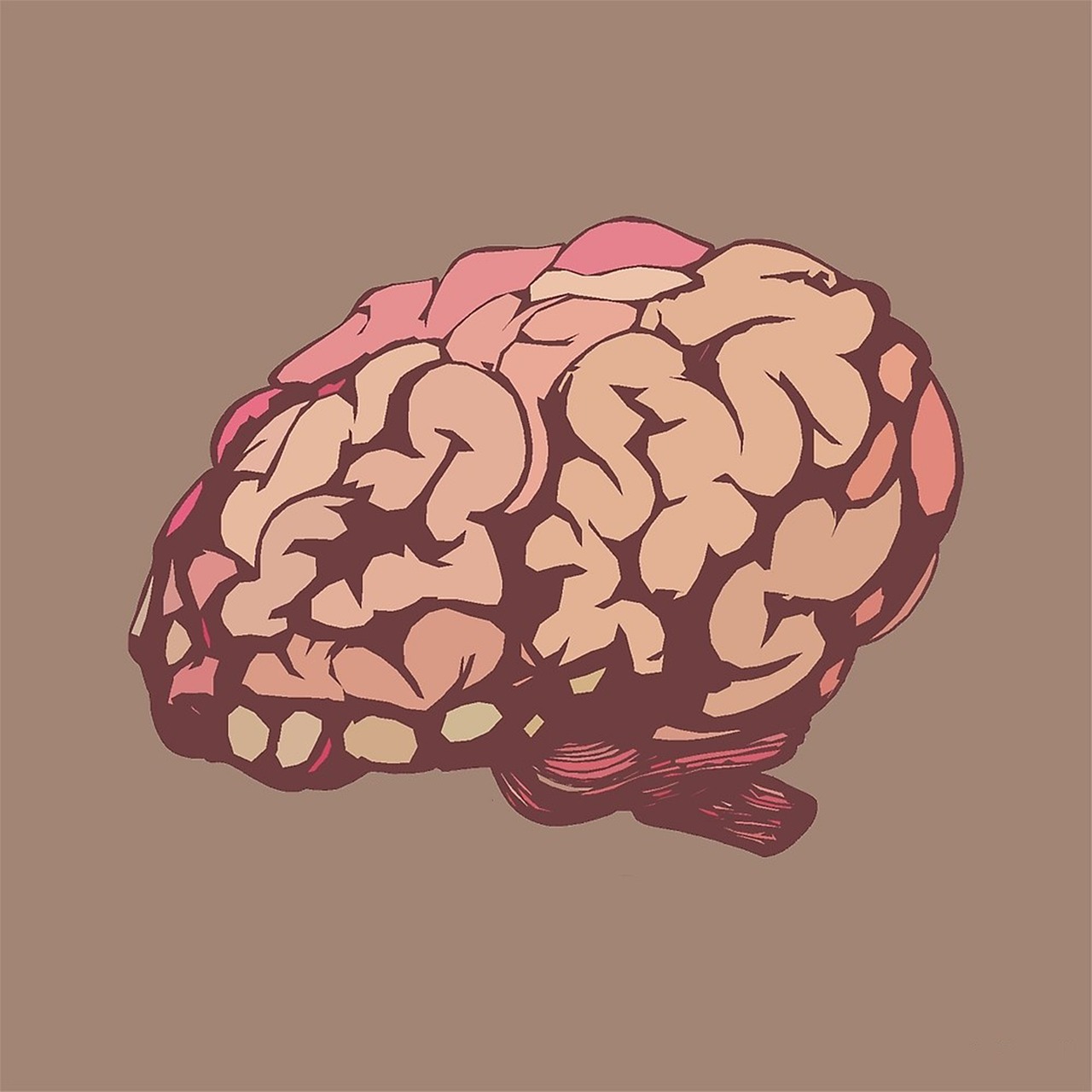
The human mind remains one of the most profound mysteries in science, a frontier where neuroscience, psychology, and philosophy converge to explore what makes us conscious beings.

For centuries, scientists have focused primarily on the brain’s cortex as the seat of consciousness, yet emerging research suggests that our awareness extends far beyond this outer layer. This exploration into the depths of consciousness challenges our fundamental understanding of what it means to be aware, sentient, and truly alive. By examining neural networks, subcortical structures, and even quantum theories of consciousness, we’re beginning to unlock secrets that could revolutionize how we perceive our own existence.
🧠 The Traditional View: Cortex-Centric Consciousness
The cerebral cortex has long dominated consciousness research, and for good reason. This wrinkled outer layer of the brain houses approximately 16 billion neurons responsible for higher-order thinking, language processing, sensory perception, and voluntary movement. Traditional neuroscience positioned the cortex as the command center of conscious experience, with specific regions correlating to particular aspects of awareness.
The prefrontal cortex, in particular, has been celebrated as the executive control center where decision-making, personality expression, and complex cognitive behaviors originate. Functional magnetic resonance imaging (fMRI) studies have repeatedly shown cortical activation patterns corresponding to conscious states, reinforcing this cortex-centric paradigm.
However, this perspective presents significant limitations. Patients with substantial cortical damage sometimes retain consciousness, while individuals in vegetative states may show cortical activity without apparent awareness. These paradoxes have prompted researchers to look deeper into the brain’s architecture for answers.
Descending into Subcortical Realms
Beneath the cortex lies a complex network of structures that play crucial roles in consciousness that science is only beginning to appreciate fully. The thalamus, often described as the brain’s relay station, acts as a gatekeeper for sensory information reaching conscious awareness. Without proper thalamic function, cortical activity alone cannot generate consciousness.
The brainstem, particularly the reticular activating system, serves as the foundation for wakefulness and arousal. This primitive structure, shared across many species, suggests that consciousness has deep evolutionary roots extending far beyond the human cortex. Even simpler organisms without developed cortices demonstrate behaviors indicating some form of awareness.
The claustrum, a thin sheet of neurons hidden beneath the cortex, has emerged as a particularly intriguing structure. Francis Crick, co-discoverer of DNA’s structure, proposed before his death that this mysterious region might coordinate conscious experience by synchronizing activity across distant brain regions. Recent studies using optogenetics have shown that stimulating the claustrum can immediately disrupt consciousness, supporting its critical role.
The Limbic System’s Emotional Consciousness 💭
Emotions form an integral component of conscious experience, and the limbic system—including the amygdala, hippocampus, and cingulate cortex—generates the emotional coloring that makes consciousness meaningful rather than merely computational. This suggests consciousness isn’t purely rational or cognitive but fundamentally emotional and embodied.
The hippocampus contributes our sense of continuous existence through memory consolidation, creating the narrative thread that connects our past to our present awareness. Without this structure, as seen in severe amnesia cases, consciousness becomes fragmented, trapped in an eternal present moment.
Network Theory: Consciousness as Integration
Modern neuroscience increasingly views consciousness not as localized in specific regions but as emerging from integrated networks spanning multiple brain areas. The Integrated Information Theory (IIT), developed by neuroscientist Giulio Tononi, proposes that consciousness arises from systems capable of integrating information in irreducible ways.
According to IIT, consciousness exists on a spectrum determined by a system’s phi value—a mathematical measure of integrated information. This revolutionary framework suggests that consciousness might exist wherever sufficient integration occurs, potentially even in non-biological systems or distributed across networks rather than concentrated in cortical tissue.
The Global Workspace Theory, proposed by Bernard Baars, complements this view by suggesting consciousness emerges when information becomes globally available across widespread brain networks. Like a theater stage illuminated by attention, certain neural representations gain access to this global workspace, entering conscious awareness while countless other processes remain unconscious.
Default Mode Network: The Introspective Mind
The discovery of the default mode network (DMN) revolutionized understanding of consciousness during rest and introspection. This network, most active when we’re not focused on the external world, supports self-referential thinking, mind-wandering, and autobiographical memory—key components of subjective conscious experience.
The DMN’s activity patterns correlate strongly with our sense of self and personal identity. Disruptions to this network appear in various consciousness disorders, depression, and meditation states, highlighting its role in maintaining the continuous narrative we identify as “me.”
🌟 Quantum Consciousness: Controversial Frontiers
Perhaps the most controversial exploration beyond cortical consciousness involves quantum mechanics. The Orchestrated Objective Reduction (Orch-OR) theory, proposed by physicist Roger Penrose and anesthesiologist Stuart Hameroff, suggests consciousness arises from quantum computations in microtubules within neurons.
While mainstream neuroscience remains skeptical, this theory addresses the “hard problem of consciousness”—explaining how subjective experience emerges from physical processes. Quantum effects could potentially explain the unity of conscious experience and the seemingly non-computational aspects of awareness like qualia and free will.
Recent discoveries of quantum effects in biological systems, from photosynthesis to bird navigation, have made quantum consciousness theories less dismissible than previously thought. However, the warm, wet environment of the brain poses significant challenges for maintaining quantum coherence necessary for these effects.
Consciousness Beyond the Individual Brain
Exploring consciousness beyond the cortex naturally leads to examining whether awareness extends beyond individual brains entirely. Social neuroscience reveals that our consciousness is profoundly shaped by interactions with other minds through mirror neurons and social cognition networks.
The extended mind thesis, proposed by philosophers Andy Clark and David Chalmers, argues that consciousness and cognition extend into our environment through tools, technology, and social relationships. Your smartphone, in this view, becomes part of your cognitive system, an external component of your conscious processing.
Collective Consciousness and Shared Awareness
Throughout history, humans have reported experiences of shared or collective consciousness during rituals, synchronized activities, and group flow states. While neuroscience has begun examining neural synchronization between interacting individuals, the mechanisms underlying collective consciousness remain largely mysterious.
Studies using hyperscanning—simultaneously recording brain activity in multiple people—reveal remarkable neural synchronization during cooperation, conversation, and shared experiences. This interpersonal neural coupling suggests consciousness has intrinsically social dimensions extending beyond individual skull boundaries.
🧘 Altered States: Mapping Consciousness Variations
Examining altered states of consciousness provides crucial insights into the diversity of conscious experience beyond ordinary waking awareness. Meditation traditions have explored consciousness systematically for millennia, and modern neuroscience is finally catching up.
Deep meditation states show dramatic changes in brain activity patterns, with decreased default mode network activity corresponding to reduced sense of self and expanded awareness. Psychedelic research has experienced a renaissance, revealing that substances like psilocybin and LSD dramatically increase brain network connectivity while decreasing activity in certain cortical regions.
These findings challenge the assumption that more cortical activity equals more consciousness. Instead, consciousness appears to have various modes and qualities that don’t simply correlate with increased neural firing but with different patterns of integration and connectivity.
Sleep and Dreams: Consciousness Transformed
Sleep represents a nightly journey through varied conscious states, from the bizarre narratives of REM dreams to the formless awareness sometimes reported during deep sleep. The persistence of consciousness during sleep states lacking cortical activation patterns associated with waking awareness suggests consciousness operates through diverse neural mechanisms.
Lucid dreaming, where dreamers become aware they’re dreaming while maintaining the dream state, provides a unique window into consciousness. Brain imaging of lucid dreamers shows hybrid activation patterns combining features of both waking and dreaming states, demonstrating consciousness’s remarkable flexibility.
Measuring What Cannot Be Seen 📊
Developing objective measures for consciousness presents profound challenges since awareness is inherently subjective. Nevertheless, researchers have created various tools for assessing consciousness in patients unable to communicate:
- Perturbational Complexity Index (PCI): Measures brain responses to magnetic stimulation to quantify consciousness levels
- Neural Complexity Metrics: Assess information integration patterns associated with conscious states
- Brain Connectivity Analysis: Maps communication patterns between brain regions during different consciousness states
- Behavioral Scales: Coma Recovery Scale-Revised and similar tools assess observable signs of awareness
These measurement approaches reveal consciousness operates on continua rather than as a simple on-off switch. Minimally conscious states, locked-in syndrome, and disorders of consciousness demonstrate the spectrum of awareness that exists beyond simple categories of conscious versus unconscious.
🔬 Consciousness in Unexpected Places
Recent research has discovered signatures of consciousness in surprising contexts. Studies on anesthetized patients sometimes reveal islands of cortical activity and even reported dreams despite surgical unconsciousness. This challenges our understanding of anesthesia and suggests consciousness might persist in fragmentary forms we don’t fully recognize.
Animal consciousness research has expanded dramatically, with studies demonstrating complex awareness in octopuses, corvids, and even insects. These creatures accomplish sophisticated cognitive feats with brain structures dramatically different from mammalian cortices, proving consciousness doesn’t require our particular neural architecture.
Even patients in vegetative states sometimes show brain responses to commands, detectable only through advanced neuroimaging. These hidden signs of awareness have profound ethical implications for medical decision-making and demonstrate how easily consciousness can hide beneath absent behavioral responses.
Artificial Consciousness: Digital Minds?
As artificial intelligence grows increasingly sophisticated, questions about machine consciousness become unavoidable. If consciousness emerges from information integration patterns rather than biological tissue specifically, could artificial systems become genuinely aware?
This question remains deeply controversial, with some researchers arguing current AI lacks the integrated information structure necessary for consciousness, while others suggest certain advanced systems might already possess rudimentary awareness we cannot recognize or measure.
The Embodied Mind: Consciousness Throughout the Body
Exploration beyond the cortex increasingly reveals consciousness as embodied rather than brain-bound. The enteric nervous system in your gut contains hundreds of millions of neurons, communicating extensively with the brain through the gut-brain axis. This “second brain” influences mood, decision-making, and even personality—aspects we consider quintessentially conscious.
Interoception—awareness of internal bodily states—forms a foundation for emotional consciousness and self-awareness. The insula cortex processes these signals, but the conscious experience of being a body arises from integrated signals throughout the entire organism.
Cardiac signals influence perception and cognition, with heartbeats modulating sensory awareness and decision-making. This reciprocal relationship between heart and brain challenges brain-centric models of consciousness, suggesting awareness emerges from body-brain systems rather than neural tissue alone.
💡 Practical Implications: From Theory to Application
Understanding consciousness beyond the cortex has profound practical implications. In medicine, recognizing subcortical and network contributions to awareness improves diagnosis and treatment of consciousness disorders. Families facing difficult decisions about life support benefit from more nuanced understanding of varied consciousness states.
Mental health treatment increasingly incorporates practices that modulate consciousness through meditation, breathwork, and even psychedelic-assisted therapy. These approaches work not by targeting specific cortical regions but by altering network dynamics and integration patterns throughout the brain.
Educational methods can optimize learning by working with consciousness’s natural rhythms and states rather than assuming a single optimal mode of awareness. Understanding attention, mind-wandering, and flow states helps create environments supporting diverse ways of knowing.
Where Consciousness Research Leads Next 🚀
The frontier of consciousness research continues expanding in multiple directions simultaneously. Advanced neuroimaging techniques with ever-improving temporal and spatial resolution reveal dynamics previously invisible. Optogenetics allows unprecedented control over specific neural populations, enabling causal experiments about consciousness mechanisms.
Computational modeling creates testable theories about how consciousness emerges from neural dynamics. Brain organoids raise challenging questions about whether lab-grown neural tissue might develop consciousness, demanding ethical frameworks for this possibility.
International collaborative projects like the Human Brain Project and BRAIN Initiative coordinate research across laboratories worldwide, accelerating discoveries about consciousness’s neural foundations and seeking to map the complete connectome of human awareness.

The Mystery That Remains
Despite remarkable progress, the fundamental mystery of consciousness persists. How does the felt quality of experience—the redness of red, the painfulness of pain—emerge from neural activity? Why are we conscious at all rather than unconscious automata processing information without awareness?
These questions may require entirely new conceptual frameworks, perhaps bridging physics, information theory, and neuroscience in ways not yet imagined. Consciousness might represent a fundamental feature of reality itself rather than merely an emergent property of complex information processing.
What remains clear is that consciousness extends far beyond the brain’s cortex, involving subcortical structures, body-wide systems, quantum phenomena, social interactions, and perhaps aspects of reality we haven’t yet conceptualized. Each discovery unlocks new questions, revealing consciousness as infinitely more subtle, diverse, and profound than previously imagined.
The journey to understand consciousness continues, promising not only scientific breakthroughs but also deeper appreciation for the extraordinary gift of awareness we experience every moment. By exploring these depths beyond the cortex, we approach the ultimate questions of existence: what we are, why we’re conscious, and what it means to be aware in this vast, mysterious universe.