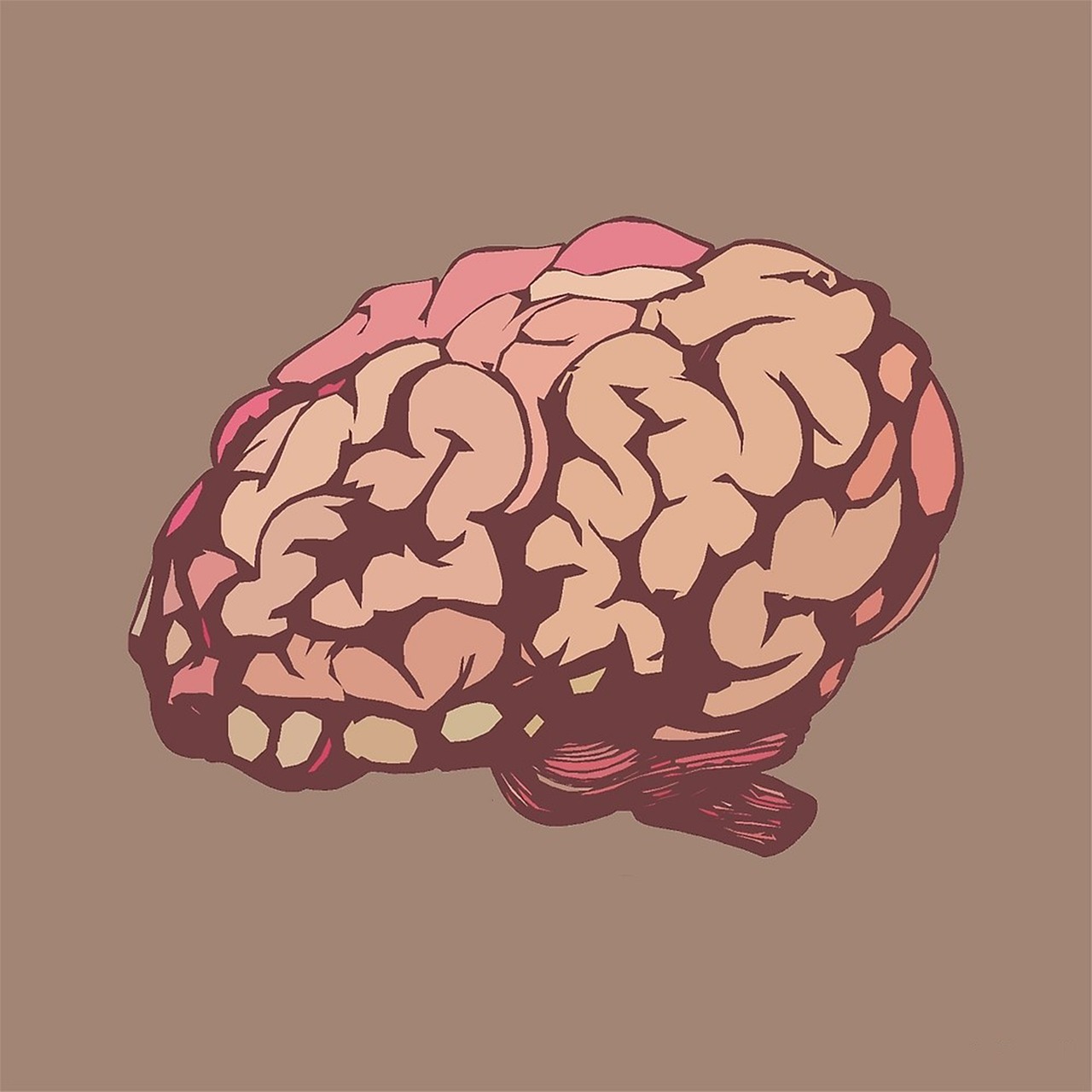
The intersection of neuroscience and artificial intelligence represents one of the most exciting frontiers in technology today. As we seek to build smarter, more adaptable machines, understanding how biological brains process information becomes increasingly crucial.

Neural connectivity—the intricate web of connections between neurons in biological brains—holds profound lessons for developing next-generation AI models. By studying how human and animal brains learn, adapt, and solve complex problems through their neural networks, researchers are discovering revolutionary approaches to machine learning that could fundamentally transform artificial intelligence as we know it.
🧠 The Blueprint: Understanding Biological Neural Networks
The human brain contains approximately 86 billion neurons, each forming thousands of connections with other neurons. This massive interconnected network enables everything from basic reflexes to abstract reasoning and creative thought. Unlike traditional computers that process information sequentially, biological neural networks operate through parallel processing, where countless computations happen simultaneously across distributed neural pathways.
What makes biological neural connectivity so remarkable is its efficiency and adaptability. The brain consumes roughly 20 watts of power—less than a standard light bulb—yet outperforms supercomputers in pattern recognition, language processing, and adaptive learning. This efficiency stems from the sophisticated architecture of neural connections, where synaptic weights constantly adjust based on experience through a process called neuroplasticity.
Modern neuroscience techniques, including functional MRI, calcium imaging, and optogenetics, have revealed how specific connection patterns enable different cognitive functions. Researchers have discovered that intelligence doesn’t just depend on the number of neurons but rather on how they’re connected, the strength of those connections, and the dynamic patterns of activity flowing through neural circuits.
From Biology to Silicon: Translating Neural Principles
Artificial neural networks, the foundation of modern deep learning, were initially inspired by biological neurons. However, early models represented simplified versions of their biological counterparts. Today’s AI researchers are returning to neuroscience with renewed interest, seeking deeper insights that could overcome current limitations in artificial intelligence systems.
One critical lesson from biological neural networks is the concept of hierarchical processing. The visual cortex, for example, processes information through multiple layers, with each layer detecting increasingly complex features. Early layers identify edges and basic shapes, while deeper layers recognize objects and faces. This hierarchical architecture directly inspired convolutional neural networks, which have revolutionized computer vision.
Another vital principle is sparse connectivity. Unlike fully connected artificial neural networks where every neuron connects to every other neuron in adjacent layers, biological brains employ selective connectivity. This sparsity reduces computational demands while maintaining robust performance—a principle that researchers are now incorporating into more efficient AI architectures.
⚡ Dynamic Connectivity and Learning
Biological brains don’t just have fixed connections—they constantly rewire themselves based on experience. This dynamic connectivity enables continuous learning throughout life without catastrophic forgetting, a major challenge in artificial neural networks. When AI models learn new tasks, they often overwrite knowledge needed for previous tasks, a problem rarely seen in biological systems.
Researchers are exploring mechanisms like synaptic consolidation, where important connections are strengthened and protected while less relevant ones fade. This selective stabilization allows the brain to retain crucial information while remaining flexible enough to acquire new knowledge. Implementing similar mechanisms in AI could enable lifelong learning systems that accumulate expertise without losing previously acquired skills.
Neuromorphic Computing: Hardware Inspired by the Brain
Beyond software algorithms, neural connectivity principles are inspiring entirely new computer architectures. Neuromorphic computing aims to build hardware that mimics the structure and function of biological neural networks, potentially achieving brain-like efficiency and capabilities.
Traditional computers separate memory and processing units, creating a bottleneck as data shuttles between them. In contrast, biological neurons combine both functions—synapses store information while simultaneously processing signals. Neuromorphic chips replicate this integration using artificial synapses and neurons built from novel materials and circuits.
Companies and research institutions worldwide are developing neuromorphic processors that promise dramatic improvements in energy efficiency for AI tasks. Intel’s Loihi chip, IBM’s TrueNorth, and various memristor-based systems demonstrate how brain-inspired hardware can perform neural network computations using a fraction of the power required by conventional processors.
🔄 Spiking Neural Networks: Timing Matters
Most artificial neural networks use continuous values to represent information, but biological neurons communicate through discrete electrical spikes. The timing and pattern of these spikes encode information in ways that continuous-value networks cannot easily replicate. Spiking neural networks (SNNs) represent a new generation of AI models that incorporate temporal dynamics more faithful to biological systems.
SNNs offer potential advantages in processing time-varying data like audio, video, and sensor streams. They’re particularly well-suited for event-based sensors that report changes asynchronously rather than capturing full frames at fixed intervals—much like how our retinas respond to visual stimuli. This event-driven approach dramatically reduces redundant data processing, enabling more efficient real-time perception systems.
Attention Mechanisms and the Spotlight of Consciousness
One of the most successful recent innovations in AI—attention mechanisms—draws direct inspiration from how biological brains selectively focus on relevant information. Our brains cannot process all incoming sensory data with equal depth, so attention systems prioritize what matters most for current goals.
The transformer architecture, which powers breakthrough models like GPT and BERT, relies on self-attention mechanisms that allow the model to weigh the importance of different parts of the input when processing each element. This approach mirrors how reading comprehension works in humans—we constantly relate new words and phrases to earlier context, dynamically adjusting which previous information influences our interpretation.
Neuroscience research on attention networks in the brain continues to inform AI development. Studies of how the prefrontal cortex modulates activity in sensory areas provide insights for building more sophisticated attention mechanisms that could enable AI systems to handle complex, multi-faceted tasks requiring flexible focus allocation.
🌐 Graph Neural Networks: Embracing Relational Structure
The brain’s connectivity isn’t random—it exhibits specific organizational principles including small-world properties, modular structure, and hub nodes that integrate information across regions. Graph neural networks (GNNs) represent a growing family of AI models designed to process data with explicit relational structure, much like neural connectivity patterns.
GNNs excel at tasks involving networks, molecules, social relationships, and knowledge graphs because they directly model connections between entities. This approach aligns with how the brain represents knowledge—not as isolated facts but as interconnected concepts within semantic networks. By embracing relational structure, GNNs achieve better generalization on problems where relationships matter as much as individual features.
Researchers are exploring how biological connectivity patterns could inspire better GNN architectures. For instance, incorporating hierarchical modular structure—a hallmark of brain organization—into artificial graph networks could improve their ability to learn abstract representations and transfer knowledge across domains.
💡 Predictive Processing and Active Inference
Neuroscience increasingly views the brain as a prediction machine that constantly generates models of the world and updates them based on prediction errors. This predictive processing framework suggests that perception, learning, and action all emerge from efforts to minimize surprise by improving internal models.
This perspective is inspiring new AI approaches centered on prediction and uncertainty estimation. Rather than passively responding to inputs, these systems actively generate hypotheses about their environment and test them through interaction. Active inference models, which select actions to gather information that reduces uncertainty, show promise for robotics and reinforcement learning applications.
Self-supervised learning methods increasingly popular in AI also reflect predictive principles. By training models to predict masked or future inputs from available context, these approaches enable learning from unlabeled data—much like how humans learn about the world through exploration and prediction rather than constant explicit instruction.
Multi-Scale Integration: From Synapses to Systems
Biological intelligence emerges from interactions across multiple scales—molecular processes at synapses, cellular dynamics of individual neurons, circuit-level computations, and system-level coordination across brain regions. Understanding and replicating this multi-scale organization presents both challenges and opportunities for AI development.
Current AI models typically operate at a single scale of abstraction. Neural networks have layers and units, but they lack the rich hierarchical organization spanning multiple spatial and temporal scales found in biological brains. Developing AI architectures that integrate computation across scales could enable more robust and flexible intelligence.
Research on capsule networks and compositional models attempts to build such hierarchical representations, where higher-level structures explicitly emerge from and depend on lower-level components. These approaches show promise for tasks requiring part-whole relationships and systematic generalization—areas where standard deep learning often struggles.
🔬 Neuroplasticity as a Model for Adaptive AI
The brain’s ability to reorganize itself in response to experience—neuroplasticity—enables remarkable recovery from injury and adaptation to new environments. This adaptive capacity depends on multiple mechanisms operating at different timescales, from rapid synaptic changes during learning to slower structural modifications that consolidate skills.
Modern AI training typically involves a distinct learning phase followed by deployment with fixed weights. In contrast, biological systems continue learning throughout operation, seamlessly integrating new information without separate training periods. Meta-learning and continual learning research aims to give AI systems similar adaptability, enabling them to adjust quickly to new situations while retaining existing knowledge.
Techniques like neural architecture search and plastic networks that modify their own structure during operation draw inspiration from neuroplasticity. These approaches could lead to AI systems that autonomously adapt their computational strategies to match task demands, much like how the brain recruits different neural resources for different challenges.
🎯 Embodied Intelligence and Sensorimotor Integration
Biological intelligence evolved to guide action in physical environments, not to process abstract information in isolation. This embodied perspective emphasizes that cognition emerges from dynamic interactions between brain, body, and environment. Many cognitive functions—from spatial reasoning to abstract thought—appear grounded in sensorimotor experience.
For AI, embodiment suggests that achieving human-like intelligence may require systems that learn through physical interaction rather than just processing static datasets. Robotics research increasingly focuses on sensorimotor integration, where perception and action develop together through environmental engagement. Such systems show improved generalization because they learn robust representations tied to action affordances rather than superficial sensory patterns.
Virtual environments and simulators provide scalable platforms for embodied AI research, allowing agents to develop sensorimotor skills before transfer to physical robots. This approach mirrors how infant brains develop—through extensive self-supervised exploration that builds foundational representations later refined for specific tasks.
The Road Ahead: Challenges and Opportunities
While neural connectivity provides invaluable inspiration for AI development, directly replicating biological systems isn’t always optimal or necessary. Evolution optimized brains for survival and reproduction under specific ecological constraints, not for every possible computational task. The goal isn’t perfect brain emulation but extracting principles that improve artificial systems for their intended purposes.
Several key challenges remain in translating neuroscience insights to practical AI improvements. Our understanding of brain function, though advancing rapidly, remains incomplete. Many neural mechanisms operate at scales or timescales difficult to measure with current technology. Additionally, some biological solutions may not translate effectively to silicon implementations due to fundamental differences between neural tissue and electronic circuits.
Despite these challenges, the convergence of neuroscience and AI accelerates. Larger collaborations bringing together neuroscientists, computer scientists, and engineers are tackling questions at the intersection of both fields. As measurement technologies improve and computational models become more sophisticated, the feedback loop between brain research and AI development will likely strengthen.
🚀 Transformative Applications on the Horizon
Brain-inspired AI promises transformative applications across domains. In healthcare, neuromorphic sensors and processors could enable advanced prosthetics with natural sensory feedback and control. Improved neural interfaces might restore function after neurological injury or enhance cognitive capabilities.
For robotics, incorporating principles of neural connectivity could yield machines with more robust perception, flexible learning, and efficient operation in unpredictable environments. Rather than requiring extensive programming for each scenario, brain-inspired robots could adapt autonomously through experience, handling novel situations more gracefully.
In scientific research, AI models built on neural principles might help us understand the brain itself, creating a virtuous cycle where better AI enables better neuroscience, which in turn inspires better AI. Computational models that successfully replicate neural phenomena provide testable hypotheses about biological mechanisms and help interpret complex experimental data.

Building Intelligence for Tomorrow
The future of AI lies not in abandoning neural inspiration but in engaging more deeply with the principles underlying biological intelligence. As we unravel the mysteries of neural connectivity—how billions of neurons coordinate to produce thought, perception, and action—we gain not just knowledge about ourselves but blueprints for machines that might one day match or exceed human cognitive abilities.
This journey requires patience and interdisciplinary collaboration. The brain took hundreds of millions of years to evolve, and understanding it fully may take generations of research. However, each insight into neural connectivity principles brings practical benefits for AI systems, improving their efficiency, adaptability, and capability.
Ultimately, harnessing neural connectivity to inspire next-generation AI models represents more than a technical challenge—it’s an opportunity to understand intelligence itself, both natural and artificial. By learning from nature’s most sophisticated information processing system, we unlock possibilities for technology that augments human potential, solves pressing global challenges, and expands the boundaries of what machines can achieve. The convergence of neuroscience and artificial intelligence isn’t just the future of technology; it’s the pathway to unlocking the deepest mysteries of mind and creating tools that amplify human creativity, knowledge, and capability in ways we’re only beginning to imagine.